Collectible Figure Case Study: How a 9-Month Account Matrix Drove 200+ Monthly Orders
Project Background
This case involves a collectible figure brand expanding overseas, with a core product line of celebrity-likeness custom action figures — figures modeled after well-known public figures, with interchangeable hairstyles and adjustable posable joints, built around fan-driven collecting and gifting occasions. This category carries a non-trivial order value (starting at $129) and depends heavily on visual persuasiveness — how accurate and finely detailed the figure looks — making it a natural fit for short-video content.
The brand's goal was clear from the start: not just exposure and follower count, but sustained, reliable traffic to the DTC site that converts into actual orders. That meant the account matrix needed to support a relatively long operating window, not a short burst of traffic that fizzles out.
The Matrix: 50 Accounts Over a 9-Month Run
The matrix was configured as 50 accounts spanning TikTok, YouTube, Facebook, Instagram, and X — 10 accounts per platform, corresponding to our Advanced service tier, run over a 9-month period.
This scale and duration reflects the repeat-purchase and long-tail traffic nature of this category. The audience for collectible figures is a relatively niche fan community, requiring sustained content across different celebrity IPs and product lines — a single account can't realistically cover a wide enough range of topics. Ten accounts per platform let content segment vertically by celebrity likeness and product line, avoiding the diffusion that comes from cramming everything into one account.
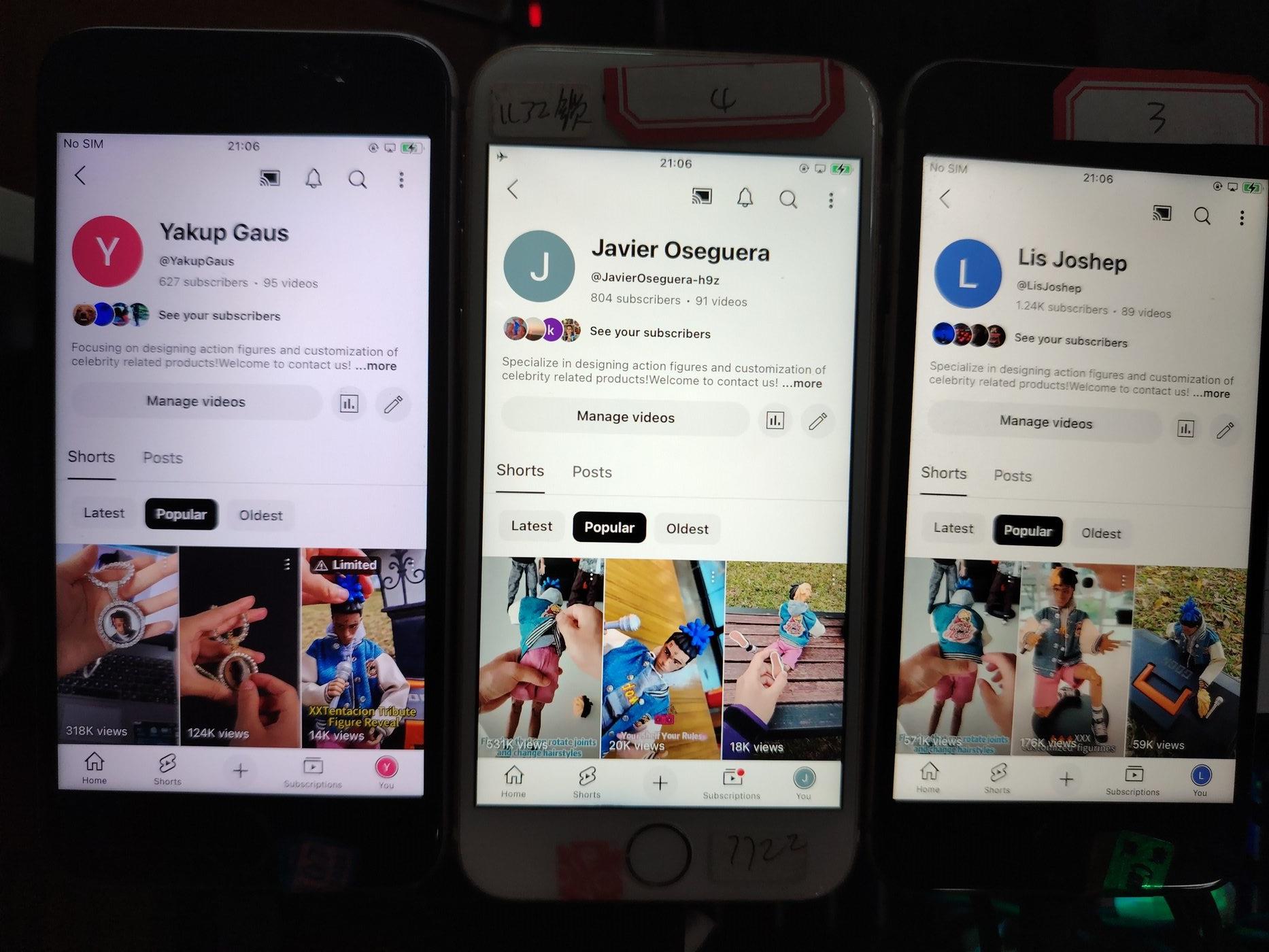
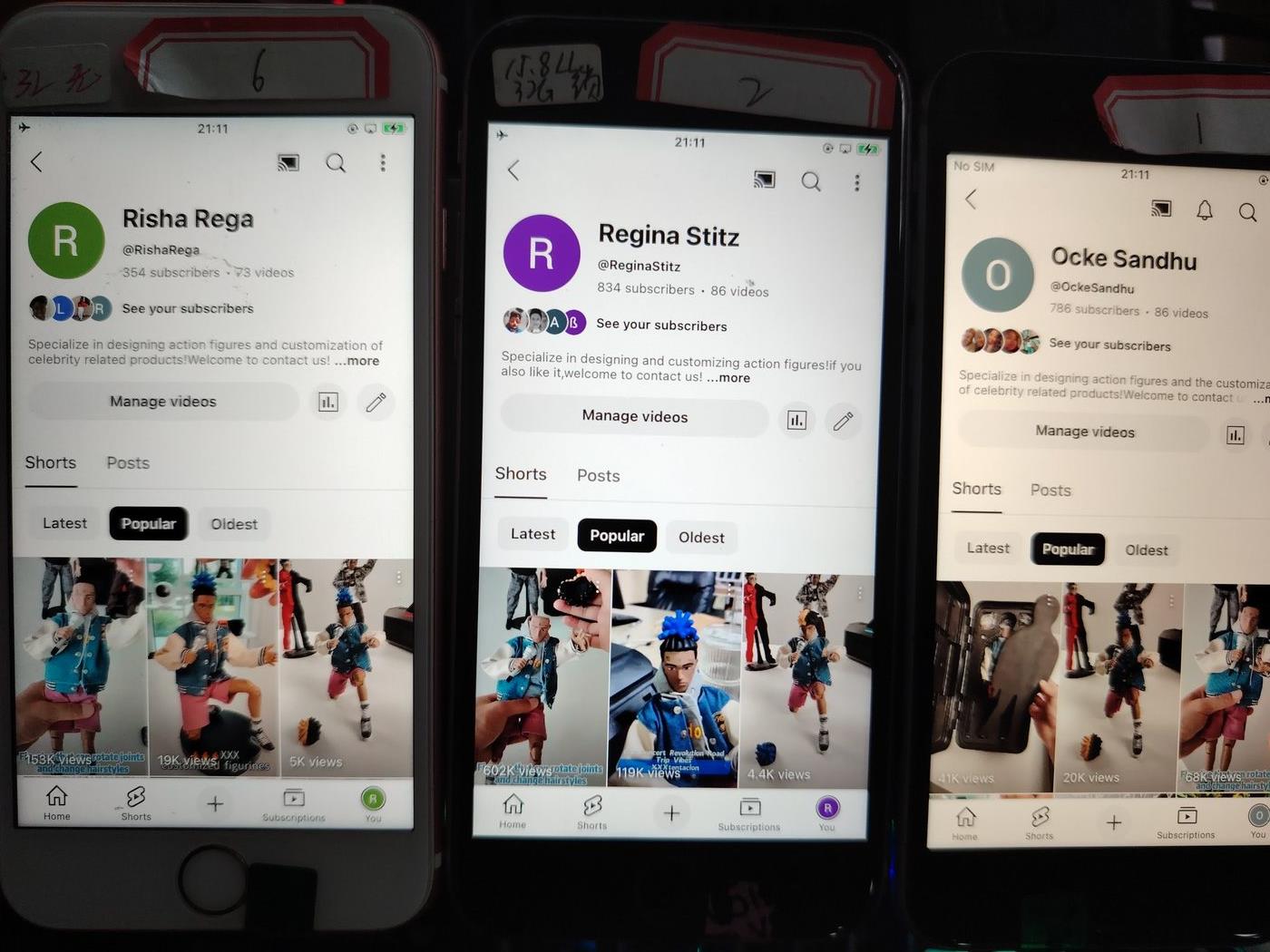
Looking at the actual YouTube matrix accounts, multiple accounts carried nearly identical positioning: "Specialize in designing action figures and customization of celebrity related products," with subscriber counts ranging from a few hundred to over a thousand. This "many small-to-mid accounts running in parallel" approach, rather than betting on one flagship account, is a concrete example of how a matrix spreads risk and reaches a broader audience.
Content Strategy: Customization Process Plus Detail Shots — Visual Persuasiveness Is the Core
The core of this content strategy is visual persuasiveness — how closely the figure resembles the subject, and how refined the details are, directly determine whether fans are willing to pay for it. Specific content formats included:
- Joint articulation demos: showing joint rotation and pose adjustment to prove the product's "playability," not just its status as a static display piece;
- Hairstyle/styling swap demos: highlighting customization and playability — a key differentiator from generic figures;
- Finished-product detail close-ups: the precision of facial features and clothing detail is the key information fans use to judge "is this worth the price";
- Tie-ins with celebrity IP moments: leveraging a specific celebrity's trending moments or tribute-style limited editions to piggyback on existing buzz for extra exposure.
Looking at actual performance, the highest-viewed videos concentrated on "detail showcase plus joint articulation demo" content formats, with some videos reaching 500K to 600K+ views — showing that directly showcasing the product's craftsmanship resonates more with this niche fan audience than marketing copy would.
Nine-Month Results
- Account scale: 50 accounts across 5 platforms, 10 per platform
- Engagement period: 9 months
- Highest single-video view count: approximately 2M
- Videos with 100K+ views: 100+, concentrated mainly on YouTube, Instagram, and TikTok
- Average monthly precise DTC site traffic: 7,000+
- Order value: starting at $129
- Average monthly conversions: 200+ orders
- Total precise followers: 50,000+
A few points in this data stand out. The 9-month operating window shows that for this kind of niche, fan-driven category, an account matrix's growth isn't something that happens in one quick step — building from zero to 7,000+ monthly precise visitors and 200+ monthly conversions is a process of sustained accumulation. This is exactly why our earlier "How to Evaluate a Short-Video Agency's Performance" article emphasizes setting evaluation metrics matched to the account's stage, rather than applying one fixed standard throughout.
The 100+ videos with 100K+ views concentrated on YouTube, Instagram, and TikTok — three platforms with strong visual content consumption habits and a heavy fan-community atmosphere, aligning closely with collectible figure fans' content preferences.
200+ monthly orders at a starting order value of $129 means this account matrix directly supports a meaningful chunk of monthly DTC site GMV — confirming that an account matrix isn't just an exposure channel, but a genuine conversion channel, provided the content strategy and the product's own visual persuasiveness are strong enough.
Reflection: What This Case Demonstrates
Niche, fan-driven products are naturally suited to long-term account matrix operations. This category's purchase decisions depend more on sustained attention and accumulated trust in the brand/IP than on impulse buys from a single scroll-past. The 9-month window paid off with relatively stable monthly conversion data, rather than a short burst that quickly decayed.
"Many small-to-mid accounts running in parallel" is an effective way to cover niche topics. Multiple YouTube sub-accounts within the 50-account matrix, sharing nearly identical positioning but run independently, essentially use a matrix approach to cover a wider range of celebrity IP and product-line combinations than a single account ever could.
The product's own visual persuasiveness sets the ceiling on content strategy. This category's core selling point is "how accurate and refined it looks" — no matter how strong the content strategy, it needs to rest on a product that can genuinely withstand close-up scrutiny. Content and product quality reinforce each other.
Frequently Asked Questions
Can short-video traffic really sustain conversion at a $129 order value? Yes, provided the content fully builds the "this is worth the price" trust — which is exactly why this case's content strategy leans heavily on detail showcases and genuine product demos rather than generic marketing copy. The higher the order value, the more the product's own visual and detail persuasiveness matters.
Isn't 9 months to reach stable numbers too slow? It depends on the category's nature — a niche, fan-driven product's audience-building cycle is inherently longer. But once the matrix builds a stable follower base and content methodology, monthly conversion data tends to stay relatively steady and sustainable rather than spiking and quickly decaying. This "slow start, steady output" model has a compounding effect worth factoring into the long-term view.
Final Thoughts
The core lesson from this case: niche, fan-driven products need an account matrix operated with a matching long-term mindset — trading sustained content accumulation for stable conversion output. If your product also falls into this visually-persuasive, fan-driven category, reach out to Dameng Global — we can offer specific matrix and content strategy guidance based on your product.