Power Supply Factory B2B Lead Gen Case Study: 20 Accounts, 1 Month, Where the Inquiries Came From
Project Background
This case involves a power supply factory expanding overseas, specializing in power adapters and custom power solutions, targeting overseas traders, distributors, and brands with OEM/ODM sourcing needs. Unlike consumer products, purchasing decisions for power products depend heavily on hard trust indicators — does this factory have genuine production capability, does it hold relevant certifications — rather than marketing copy or emotional resonance.
This type of B2B factory client has a very direct overseas goal: no need for broad reach or follower accumulation. The core objective is getting potential buyers to see the factory's genuine production capability as quickly as possible and prompt them to reach out with an inquiry.
The Matrix: 20 Accounts, a Relatively Lightweight Setup
The matrix was configured as 20 accounts spanning TikTok, YouTube, Facebook, Instagram, and X — 4 accounts per platform, the smallest scale among the four cases, run over just 1 month.
This relatively lightweight setup reflects the nature of factory-type B2B lead generation: it doesn't need the volume of niche-topic accounts that a category like collectible figures requires, since a factory's product line and target audience are relatively focused (power adapters, custom solutions). The matrix's role here leans more toward multi-touchpoint exposure and risk diversification than the massive content coverage needed for niche, fan-driven consumer products.
Content Strategy: Certifications Plus Production Footage, Directly Addressing B2B Trust Pain Points
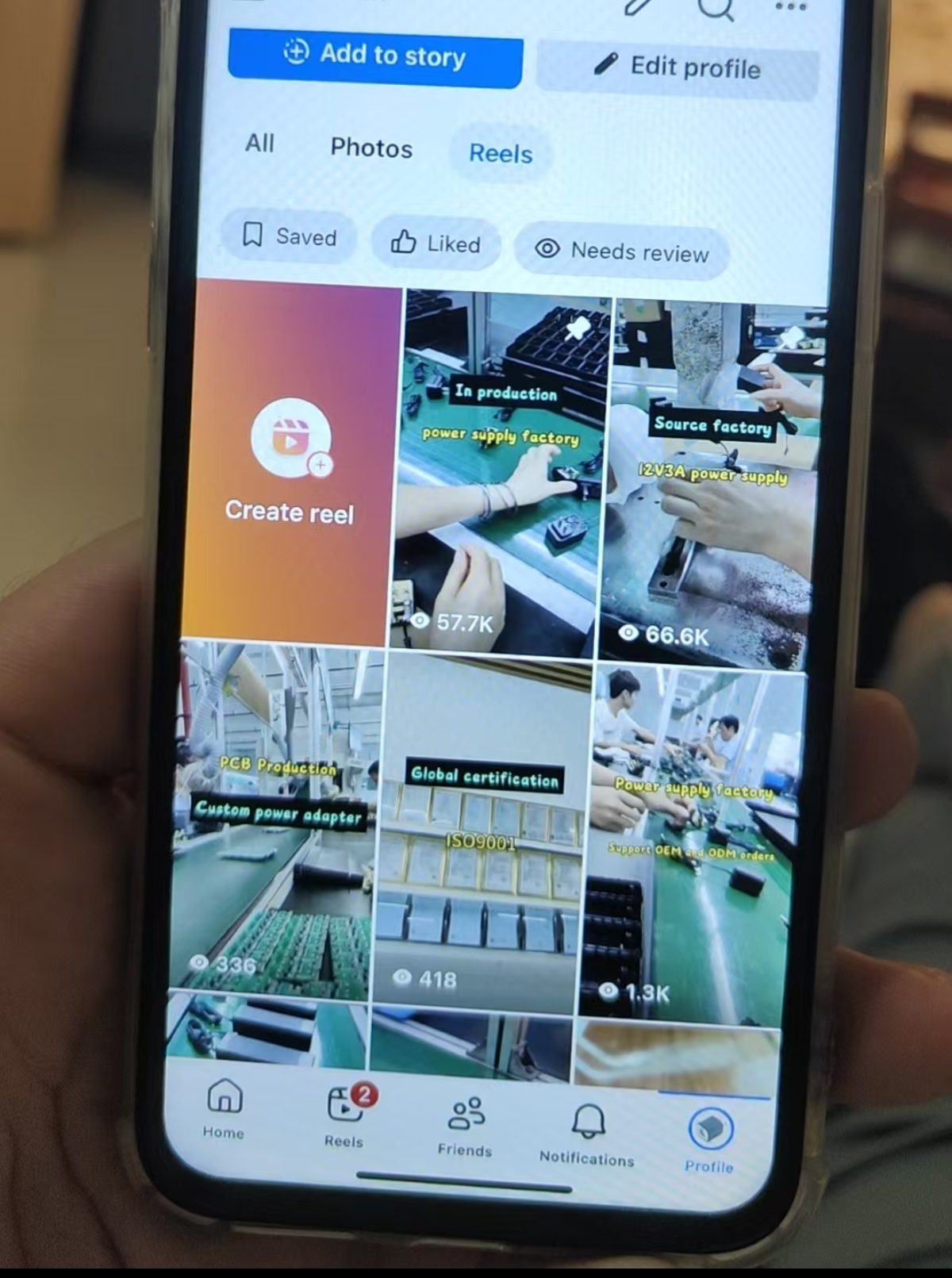
This case's content strategy shares similarities with the AI Smart Hardware case (both emphasize genuine production footage), but goes a step further by making certifications and OEM/ODM capability the core selling point of the content, reflected directly in on-screen text:
- "In production — power supply factory": directly showing the power product line actively in production;
- "Source factory": emphasizing this is the source factory, not a trading middleman — critical for B2B buyers judging whether they can get factory-direct pricing;
- "Global certification — ISO9001": clearly displaying quality management system certification, one of the hard trust indicators in B2B purchasing decisions;
- "PCB Production / Custom power adapter": showcasing custom production capability, directly matching target customers' need for custom power solutions;
- "Support OEM and ODM orders": clearly telling the target customer which partnership models this factory supports, reducing irrelevant inquiries and improving inquiry precision.
This strategy — turning the hard information B2B buyers care about directly into content — essentially uses short-video to replace a traditional factory-introduction PDF or website "About Us" page, but with far greater reach and distribution efficiency than passively waiting for a customer to visit the website.
One-Month Results
- Account scale: 20 accounts across 5 platforms, 4 per platform
- Engagement period: 1 month
- Highest single-video view count: approximately 100K
- Videos around 60K views: 5
- Time to first inquiry: inquiries started coming in within half a month
- Total B2B inquiries within one month: 7
- Deals closed: 1
The most notable point in this data is inquiries appearing within half a month. Compared to the 3-month and 9-month engagement periods in the other cases, this case's inquiry feedback loop was noticeably faster. The reasons are worth unpacking:
The target customer's decision path is shorter. B2B traders and distributors already have clear, ongoing sourcing needs — once they come across content from what looks like a credible source factory, the friction to reach out for a quote is far lower than a consumer's "should I buy this" decision. Requesting a quote isn't a purchase commitment, just gathering pricing information — a low-cost action.
Precisely matched content information lowers the decision barrier. Displaying "ISO9001 certified" and "supports OEM/ODM" directly in the video effectively pre-completes the "does this factory meet my basic requirements" judgment for a potential customer, reducing hesitation between seeing the content and deciding to inquire.
7 inquiries against 1 closed deal isn't a particularly high conversion rate on paper, but needs to be understood alongside the purchasing decision cycle typical for B2B power products — sourcing usually involves sampling, testing, and bulk-order validation across multiple stages. A one-month observation window likely only captured the first closed sample within the inquiry-to-close pipeline; with the remaining 6 unclosed inquiries still being followed up on, actual conversion is likely to continue growing over a longer window.
Reflection: What This Case Demonstrates
In B2B factory lead-gen contexts, the account matrix doesn't need to chase large-scale content volume — it needs to chase information precision. A relatively lightweight setup of 20 accounts over 1 month generated inquiries, and the key wasn't account count or absolute view numbers, but whether each piece of content precisely hit the hard trust indicators B2B buyers care about.
"Hard information" like certifications and production capability can and should be built directly into content, rather than tucked away on an "About Us" page waiting for a customer to dig it up. Front-loading this information into short-video content effectively replaces a passive website detail page with a far more efficient distribution channel.
How quickly results build depends heavily on the target customer's decision characteristics. B2B trade purchasing has relatively low decision friction (inquiring is low-cost), so inquiry feedback can appear faster than in consumer decision contexts. This shouldn't be applied uniformly to every category — it requires analyzing the specific target customer's decision path.
Frequently Asked Questions
With only 20 accounts and 1 month, is the sample too small to be meaningful? In absolute terms of inquiry volume and closed deals, the scale is indeed modest — but "inquiries within half a month" is itself a meaningful signal, indicating the content strategy matched target customer needs fairly precisely. Matrix scale can reasonably be expanded once this initial validation is confirmed to work sustainably.
Can this playbook be directly copied to other B2B factory categories? The core logic (genuine production footage plus certifications plus front-loading the hard information buyers care about) has some general applicability, but the specific trust indicators vary by industry (a food category might weigh FDA certification or origin information more heavily, for example) — content strategy priorities need adjusting to the specific category.
Final Thoughts
The core lesson from this case: for B2B factory lead generation, account matrix content strategy should be designed around precisely hitting the hard trust indicators purchasing decision-makers care about — scale doesn't need to be large, but the information needs to land accurately. If you're also a factory-type business looking to reach overseas B2B buyers through a short-video matrix, reach out to Dameng Global — we can offer specific content strategy guidance based on your category and target customer profile.